


What Are Tension Fabric Buildings? Frame, Fabric and Uses
A tension fabric building is a galvanized steel frame with a PVC or PE fabric cover, needs little upkeep and should last an estimated 9 to 12 years.
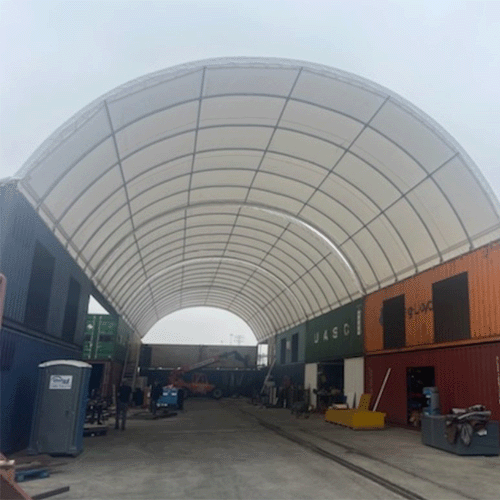
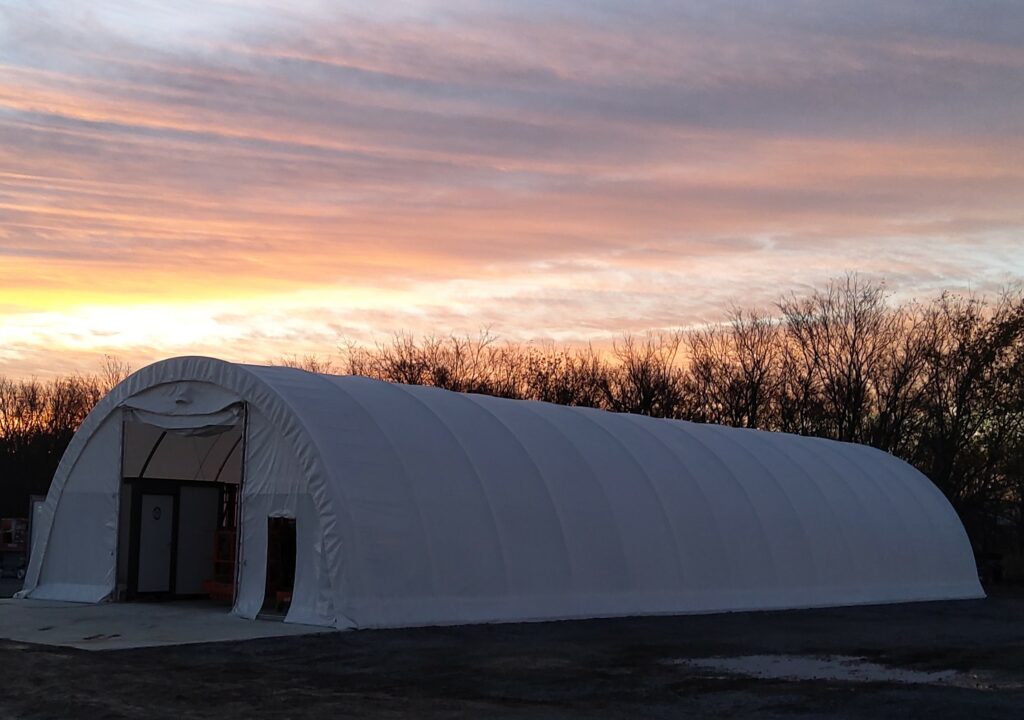
A tension fabric building is a steel frame with a fabric cover stretched tight across its steel ribs. Covermore Buildings sells tension fabric buildings. The tension in the fabric is what keeps the building stable and durable.
What are tension fabric buildings made of?
A tension fabric building has two parts: a steel frame and a fabric cover.
- Frame: the frame is galvanized steel.
- Cover: the frame is enclosed by a tension fabric made from PVC (polyvinyl chloride) or PE (polyethylene).
Are fabric buildings cost efficient?
Yes, fabric buildings are cost efficient. The materials used for tension fabric buildings are typically less expensive, allowing for potential savings compared to traditional construction methods. Traditional steel buildings, especially permanent facilities, require a high initial investment in materials along with more time to install. A fabric structure offers a cost-effective, time-saving alternative.
Covermore fabric buildings and shelters also have an all-white cover that lets natural light come through the fabric, saving energy on the other lighting sources a metal building would need.
How do you clean and maintain the fabric cover?
Clean the fabric cover with water, a mild dish soap and a soft sponge without hard edges. Do not use harsh chemicals, astringents or corrosive substances; they can damage the fabric.
Check the tension every few months to make sure the material is not sagging between the arches. Beyond that, a tension fabric building is low maintenance, and with proper care the building or shelter will have a longer life span.
How long does a fabric building last in wind, rain and sun?
Covermore estimates a tension fabric building's working life at 9 to 12 years. The cover is water resistant, and it holds up well through heavy wind and rain, including here in northeast Oklahoma, which sits between the plains and the Ozarks and gets plenty of both. One of our buildings has been up about five years, and the covers do not fade, even in hot sun.
What kind of damage does the fabric take?
The only damage Covermore has seen on its fabric buildings in about 7 to 8 years has come from forklifts poking holes in the side, not from weather. Even those holes did not rip any further on their own before they were patched.
Can mice and other pests get in?
Yes, mice and other small animals can get into a tension fabric building, because the building is not fully sealed. The fabric itself is solid, not like a typical tarp, so it would take a lot for an animal to claw through it. A metal building, especially one set on a concrete foundation, offers a better chance to seal rodents out.
How fast does a fabric building go up?
A tension fabric building's fabric roof system can be installed within days, a fraction of the time it takes to install a steel or metal roof. Going up that fast saves on operating delays, labor costs and overall project timelines.
Because these buildings take so little time to install and can be disassembled, they work well for job sites that are only needed for a shorter period. We do not suggest relocating a tension fabric building several times, though.
What are tension fabric buildings used for?
Tension fabric buildings keep personnel, equipment, supplies and other items out of the weather. Tension fabric buildings are clear span, so the usable storage space is not blocked by the poles and beams that other types of buildings often need.
Common uses include:
- Vehicle garage
- Equipment and machinery storage
- Sports and recreation space
- Manufacturing space
- Jobsite warehouse
- Mineral storage
- Mining sites
- Oil and gas sites
- Ports
- Warehousing and storage
Questions on the right machine for the job?
Straight answers on stock, freight, and what actually fits — no pressure.