

Tracked Boom Lift vs Rough-Terrain Lift: Which Do You Need?
A tracked boom lift suits soft, finished ground and tight access; a wheeled rough-terrain boom lift suits open ground that can take tire weight.
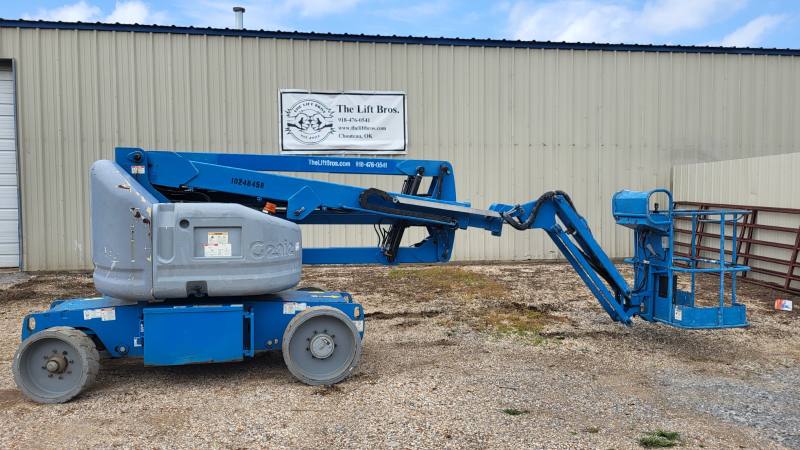
A tracked boom lift is the better fit for soft, wet or finished ground and narrow access. A wheeled rough-terrain boom lift is the better fit for open ground that is rough or sloped but can take tire weight. Two boom lifts can have nearly the same platform height and reach and still be wrong for each other's jobsite, because the difference is what is underneath the machine.
The Lift Bros, a family-run aerial lift company in Chouteau, Oklahoma, sells, repairs and refurbishes used boom lifts and rough-terrain lifts. Picking the wrong one means either a machine that cannot get where it needs to go or one that costs more than the job requires.
What is a wheeled rough-terrain boom lift good for?
A wheeled rough-terrain boom lift is good for open ground, construction sites and yards without tight access points. It fits sites where the ground is rough or sloped but firm enough to take tire weight.
When do you need a tracked boom lift instead?
You need a tracked boom lift when the ground cannot take tire weight or the access is too narrow for a wheeled machine. A tracked boom lift runs on continuous rubber tracks, which spread its weight over a much larger footprint. Tracks matter on:
- soft turf and wet sites a wheeled machine would sink into
- finished landscaping that cannot take tire ruts
- interior floors that cannot bear a heavy point load
Many tracked boom lifts are also narrow enough to pass through gates, doorways and tight side-yard access that a full-size rough-terrain lift never fits through.
Should ground condition or reach decide which boom lift you buy?
Choose between a tracked and a wheeled rough-terrain boom lift by ground condition and access width before reach. It is tempting to shop by platform height first, but the ground should narrow the field.
- Check the ground. Soft, wet or finished ground points toward a tracked boom lift almost regardless of the reach needed. Ground that is rough or sloped but can take tire weight usually does not need tracks.
- Measure the access. Measure the narrowest gate, door or path the machine has to pass through before assuming either option will fit.
- Then compare reach. Once ground and access have narrowed the choice, compare platform height and reach.
How does a tracked boom lift stay stable with the boom up?
Many tracked boom lifts stay stable by setting hydraulic outriggers before the boom goes up. The outriggers give the tracked lift a wider, steadier base than its travel footprint alone would suggest. That is why some narrow-access tracked boom lifts can still reach surprisingly high: the outriggers do the stabilizing work once the machine is parked, and the compact tracks only need to get it there.
What matters beyond the spec sheet when buying a used boom lift?
Beyond the spec sheet, a used boom lift's condition and service history matter as much as its reach. A tracked or rough-terrain lift that has been maintained and inspected properly will outlast one that looks clean but has a thin service history.
The Lift Bros sells used boom lifts and rough-terrain lifts as single machines or in bulk lots, and does not rent them. If you are trying to match a lift to a specific site, browse what The Lift Bros has at chuppindustrial.com.
Questions on the right machine for the job?
Straight answers on stock, freight, and what actually fits — no pressure.