
Aerial Lift Inspection: The Daily Walkaround Before You Go Up
An aerial lift needs a look-over before every shift. Here is a practical walkaround, from the ground up, that takes minutes and prevents accidents.
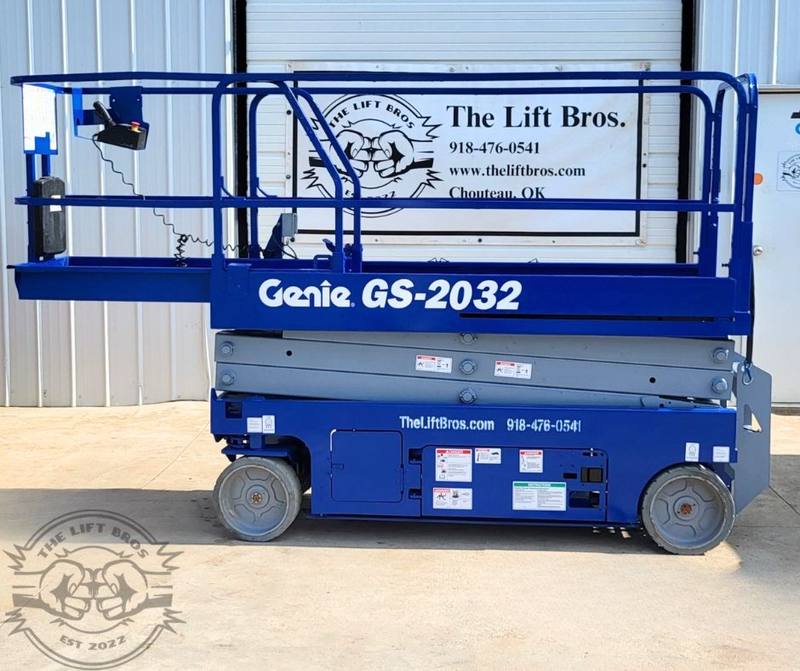
Every aerial lift should get a walkaround before it goes to work each day. It takes ten or fifteen minutes. It catches leaks, damage and dead safety devices before you are twenty feet up. This is how we go about it at The Lift Bros in Chouteau, Oklahoma.
We sell, repair and refurbish used scissor lifts, boom lifts, mast lifts and rough-terrain lifts, and we are an authorized Genie, Skyjack and JLG dealer. Always follow your machine's manual first. This is a general guide, not a replacement for it.
Why an aerial lift needs a daily check
A lift works hard and gets used by different people. An aerial lift needs a daily check because a machine that was fine yesterday can be damaged today. The operator is the last line of defense, so the operator should do the check.
Start with the paperwork
- Is the operator's manual on the machine?
- Are the decals legible?
- Is the last inspection current?
- Any tags saying the machine is out of service?
If a machine is tagged out, it stays out.
Walk around the base
Look at the chassis and tires.
- Tires: cuts, bulges, missing lug nuts, correct pressure where it applies.
- Frame and welds: cracks or bent metal.
- Leaks: oil, fluid or fuel under the machine.
- Outriggers or stabilizers, if fitted: pins in place and pads sound.
Check the power source
Electric machines: batteries charged, water at the right level, cables tight and free of corrosion, charger working.
Engine machines: engine oil, coolant, fuel and hydraulic oil at the right levels, belts and hoses in good shape.
Look at the lift structure
Scissor arms, boom sections, pins and cylinders all need a look.
- Hydraulic cylinders: no leaks, no scoring on rods.
- Hoses: no rubbing, cracks or bulges.
- Pins and retainers: in place.
- Boom: no dents or cracks, wear pads intact.
- Scissor stack: no bent arms, and the lowering path is clear.
Platform and guardrails
- Rails and gates are secure and latch properly.
- Midrails and toe boards are in place.
- Floor is clean, with no oil or debris.
- Harness anchor points are undamaged if your machine has them.
Test from the ground first
Before you go up, run the ground controls and check that the machine moves as it should, then stop and hold. Test the emergency lowering system. Check the horn, alarms and lights. Test the tilt alarm and any other safety devices the manual lists.
Then test from the platform
Get in, close the gate, and run through the controls at low height. Make sure the enable switch, steering, drive and lift all work. Listen for odd noises.
Look overhead and around
This part is not about the machine. Look up for power lines and low beams. Look for floor holes, slopes, soft ground, traffic and people. Set up on firm, level ground. Watch the wind. Do not go up if it is beyond what the manual allows.
When to stop
Take the machine out of service if you find:
- Any hydraulic leak that is growing
- Cracks in structure or welds
- Damaged guardrails
- A safety device that does not work
- Anything you are not sure about
Tag it and report it. Do not work around a problem.
Keep a record
Write down the date, the operator and any defects. A record helps you spot repeat issues and shows the machine has been looked after.
Buying a used lift
A good used machine should come with a documented inspection. Our refurbished machines get a documented refurb. Ask any seller what was checked and what was repaired.
Different machines, different checks
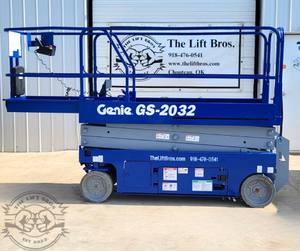
A scissor lift has no boom to inspect, but its scissor stack and lowering path matter a lot. A boom lift has more hydraulics and more pins, and the turntable and swing area need a look. A rough-terrain lift adds engine, axle and stabilizer checks. Learn the specific list for the machine you run, and keep the manual in the basket.
Train everyone who runs it
A checklist does no good if the operator does not know what a bad sign looks like. Walk new operators through it once on the machine. Show them what a healthy hose and a good pin look like next to a worn one.
Questions about a lift or a checklist for yours? Get in touch with us.
Questions on the right machine for the job?
Straight answers on stock, freight, and what actually fits — no pressure.