

Skid Steer Brush Cutter Maintenance: What to Check and Why
Skid steer brush cutter maintenance means checking blades, hydraulic seals, hardware and wear parts before small problems grow.
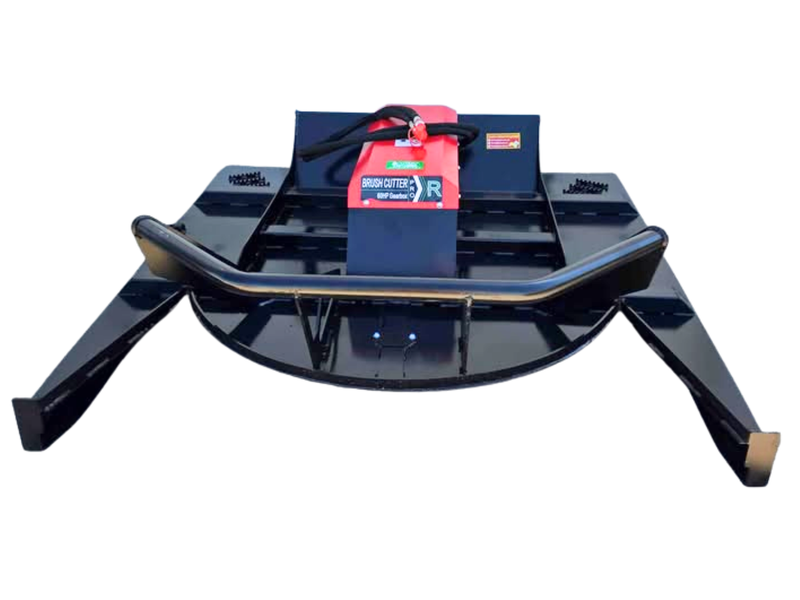
Skid steer brush cutter maintenance comes down to four things: the blades, the hydraulic seals, the mounting hardware, and the wear parts around them. A cutter runs through heavy grass, saplings, brush and ground nobody has walked in years, so good brush cutter maintenance means checking each of those parts before a small problem grows.
Chupp Industrial, a family-run equipment business in Chouteau, Oklahoma, has sold skid steer and mini skid steer attachments for about four years. Here is what to check on a brush cutter and why.
How do you know when brush cutter blades need attention?
Brush cutter blades need attention when the cutter starts taking more passes to clear the same brush. Blade wear is gradual, so operators get used to it without noticing. A brush cutter that used to clear thick brush in one pass starts taking two or three.
Slow cutting is not always a sign the attachment is underpowered for the job. Often a dull or chipped blade is simply doing less work per pass than it should. Check blade condition and the hardware holding the blades before a job, not after a breakdown.
Why do brush cutter hydraulic seals fail?
Brush cutter hydraulic seals often fail because wire, cable and vines hiding in tall grass catch on a spinning shaft. That material wraps fast and can work its way into a seal before the operator feels anything through the controls.
A slow seal leak tends to get ignored until it is obvious, and by then the bearing or shaft under the seal may be damaged too. To protect the seals:
- Walk the ground first. Look over a patch before cutting it.
- Clear wire and cable. Pull visible fence wire and cable out of the cutting path.
- Watch for leaks early. Fix a small seal leak before it becomes a bearing or shaft repair.
Why do brush cutter bolts work loose?
Brush cutter bolts work loose because vibration loosens them long before anything cracks. Mounting hardware, guard fasteners and the bolts holding the blade carrier together all deserve a quick check at the start of a workday, not just when something is already making noise.
A bolt that is loose but intact is a quick fix. A loose bolt left alone through another week of hard cutting can turn into a part that needs replacing.
Why is cleaning part of brush cutter maintenance?
Cleaning a brush cutter after a job makes the next inspection actually work. Packed grass and mud around the deck and hydraulic connections trap moisture and hide early signs of a leak or a crack in the structure.
A few minutes clearing debris off the deck and hydraulic fittings means the next inspection catches a problem instead of missing it under a layer of mud.
Does hydraulic flow matter for a skid steer brush cutter?
Yes. A brush cutter run outside its rated hydraulic flow wears out faster no matter how well it is maintained.
- A skid steer that cannot deliver enough flow stresses the cutter's hydraulic motor.
- A skid steer with too much flow can overwork components not built for it.
Getting that match right when you buy the attachment does more for its long-term life than any maintenance routine after the fact.
Should you replace brush cutter wear parts as a set?
When one brush cutter blade or bolt fails on a cutter with real hours on it, replace the matching wear parts as a set. It is tempting to swap only the part that broke, but the parts next to it have usually seen the same wear and are close behind.
Replacing wear parts together saves a second round of downtime later. It is also easier to do once the machine is already apart for the repair than to come back to it twice.
Where can you buy skid steer attachments?
Chupp Industrial sells skid steer and mini skid steer attachments from Chouteau, Oklahoma, and ships nationwide. If you are shopping for an attachment, or trying to figure out why a brush cutter is wearing faster than it should, look through what is on chuppindustrial.com.
Questions on the right machine for the job?
Straight answers on stock, freight, and what actually fits — no pressure.