


PVC Shelter Foundations: Concrete Pad, Gravel or Ground Anchoring
A PVC shelter can sit on a concrete pad, wood platform, precast concrete blocks, gravel with ground anchoring, or shipping containers.
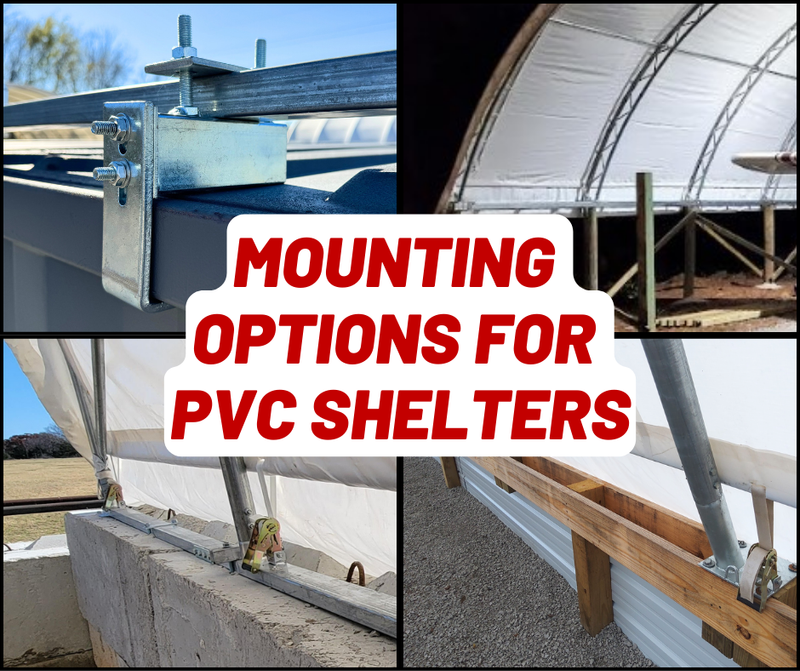
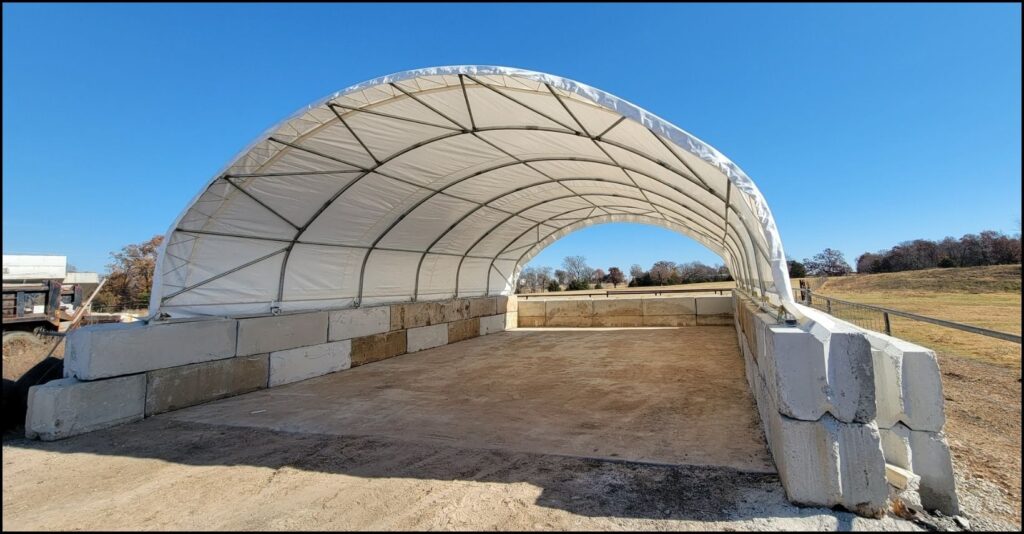
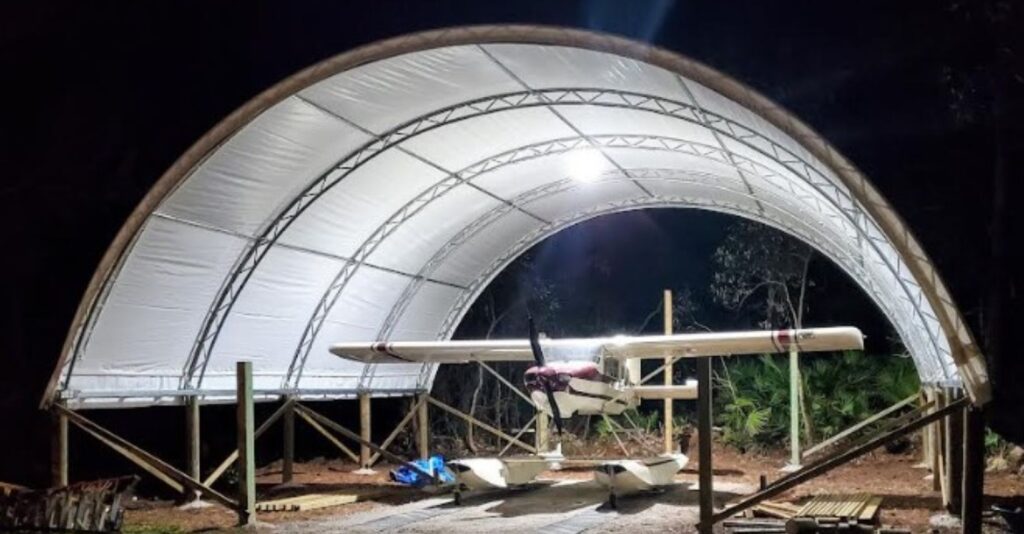
A Covermore Buildings PVC shelter can sit on a concrete pad, a wood platform, precast concrete blocks, pony walls, a gravel or earth pad with ground anchoring, or shipping containers. The right foundation depends on your location, your climate and whether the shelter will stay put or may need to move.
Is a concrete pad a good foundation for a permanent shelter?
Yes. A concrete pad is a sturdy, long-lasting choice for permanent installations where strength and stability are key. The shelter is anchored straight into the concrete with lag bolts or concrete wedge anchors.
Can a PVC shelter go on a wood platform?
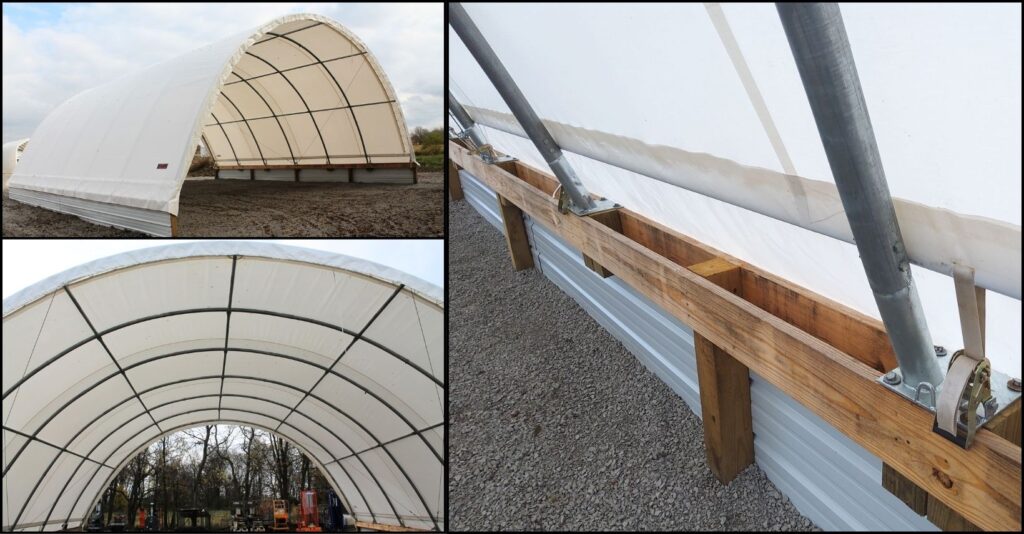
Yes. A wood platform gives a stable, level surface, and the shelter is secured with bolts or lag screws. It suits sites where concrete is not practical or where the shelter may need to move, including temporary setups.
Can you set a shelter on precast concrete blocks or pony walls?
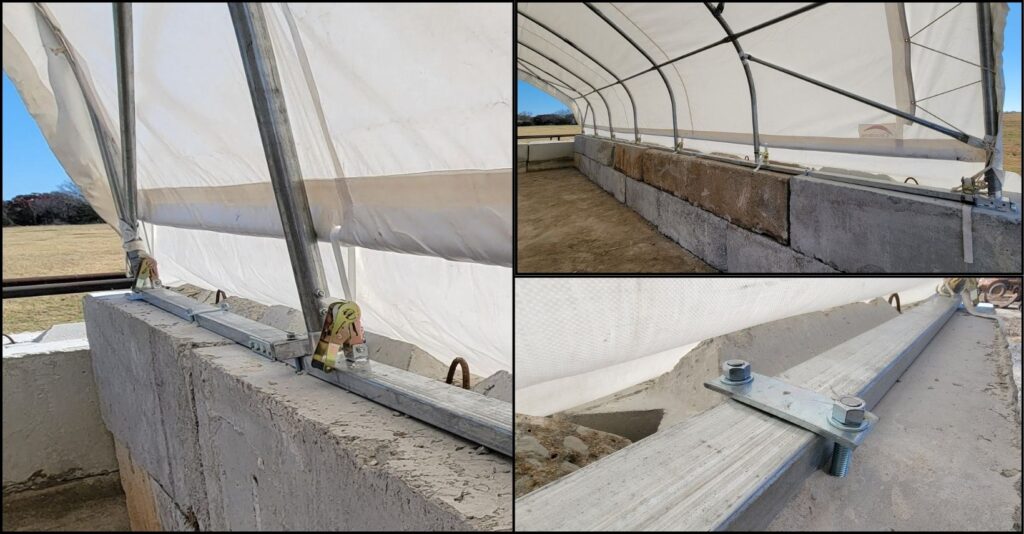
Yes. Precast concrete blocks make a stable base that can still be moved: the shelter is anchored to the blocks, and the blocks can be relocated later. They fit temporary or semi-permanent setups where you want a solid foundation without pouring a pad.
The twist-lock frame can also mount between two pony walls or on top of concrete blocks, but the twist locks must be cut off when the shelter is not going on containers.
Can a PVC shelter go on gravel or bare ground?
Yes, for temporary, relocatable or smaller shelters. On a gravel or earth pad, or with no pad at all, the shelter is held down by ground anchoring: ground spikes, duckbill earth anchors, or ballast bars and ballast systems for added weight. It is quick to set up and remove, and leaves little behind when the shelter is taken down. It works where no permanent foundation is needed or where other foundations are impractical.
Can a PVC shelter mount on shipping containers without welding?
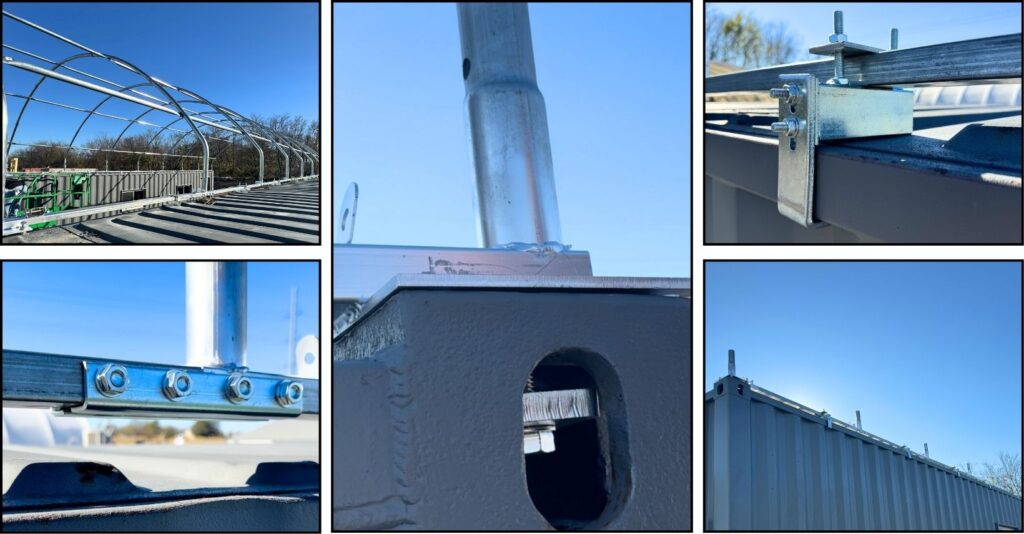
Yes. Container shelters come with interlocking twist locks that secure the frame to the tops of the containers, so no welding is required. Mounting on shipping containers is the most popular method.
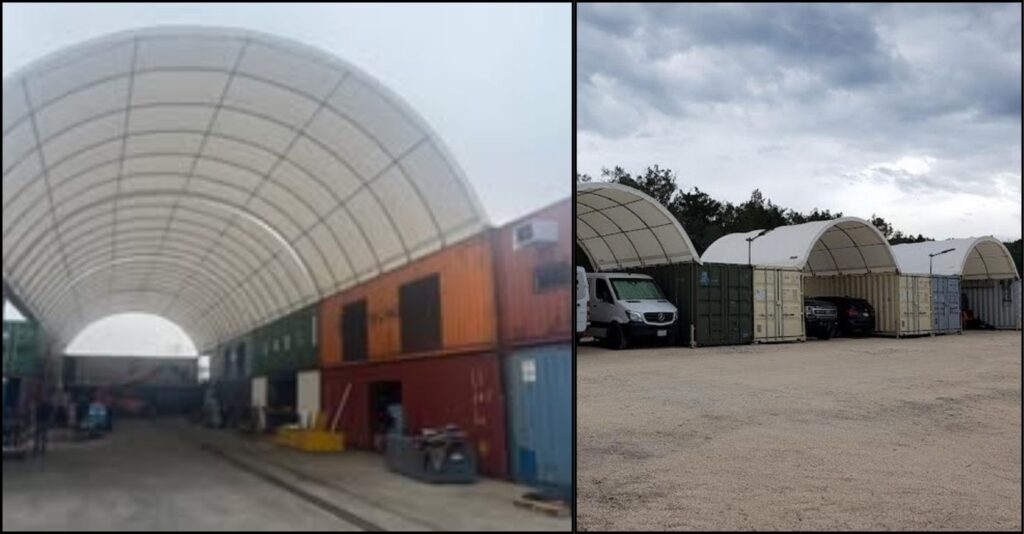
One customer took it further. They stacked two shipping containers on top of each other and mounted four 40x40 shelters front to back on them, for 160 feet of covered storage.
Questions on the right machine for the job?
Straight answers on stock, freight, and what actually fits — no pressure.