
Push Broom for a Skid Steer: What Width Fits Your Lot?
Picking a push broom attachment comes down to width, bristle and machine match. Here is how to choose for parking lots, shops and jobsites.
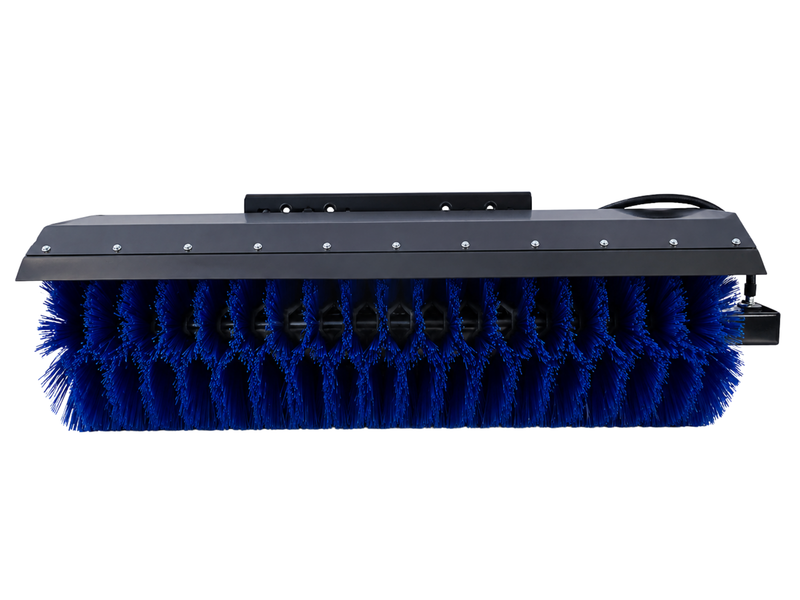
A push broom on a skid steer turns a machine you already own into a sweeper. Parking lots, shop floors, loading docks and finished jobsites all need cleaning, and a broom does it faster than a crew with hand brooms. The question is which push broom to buy. Width is the first answer.
What width push broom should you pick?
For parking lots and other big paved areas, most people choose a 72-inch or 84-inch broom. Width also has to match your machine and your space.
A 72-inch broom suits most mid-size skid steers and gives you good control around parked cars, curbs and light poles. An 84-inch broom sweeps a wider path and pays off on large open lots. But a wider broom needs a machine with the lift and hydraulic flow to turn it properly, and it is harder to steer around obstacles.
Match the broom to the machine
Before you buy any attachment, get your machine's make and model in front of you. Check the mounting plate style, the hydraulic flow and the machine's rated capacity. A broom that is too big or too heavy can strain the loader arms.
If you send us your machine's make and model, our sales team can help you match the right broom to it. That is a better plan than guessing and returning a heavy attachment.
Small machines are a special case. A mini skid steer has less lift and less flow than a full-size one. Attachments are not interchangeable between the two, so never assume a full-size attachment fits a mini. Ask first.
Bristle: poly, wire or a mix
The material of the bristle matters as much as the width.
Poly bristle is the general choice. It sweeps dirt, gravel, sand, leaves and light debris, and it is gentle on asphalt and concrete. Most buyers start here.
Wire bristle is more aggressive. It scrapes off caked mud, dried material and rust, but it wears surfaces faster and is not for finished pavement.
Mixed bristle puts the two together, giving you sweeping power and some scrubbing action.
Think about what you actually clear. A landscaper cleaning a finished driveway wants poly. A crew cleaning a rough site after demolition may want something tougher.
Angle and collection
Some brooms angle left and right, which lets you push debris to the side, out of your way. That is handy on roads and lots where you want a clean windrow. A straight broom is fine if you sweep in a pattern and gather piles later.
Collection is the other choice. A broom moves material and leaves it in a pile or windrow. A collecting sweeper picks it up. If you cannot leave piles behind, choose a collecting sweeper.
Sweeping tips that save money
- Set the broom so the bristles just touch the surface. Pressing down wears them out quickly.
- Sweep in slow, even passes. Speed throws debris and leaves streaks.
- Wet dust is harder to move. Sweep before rain, or use water in a controlled way.
- Look at the bristles after each job and replace them before they wear to the core.
- Store the broom flat, off its bristles, so they hold their shape.
Is it worth buying a skid steer broom instead of renting?
Owning a skid steer broom attachment makes sense if you sweep regularly; renting a sweeper is fine for a one-off job. If you have regular lots, seasonal cleanup, or contract work, owning the attachment turns it into a tool you can put on any job. A broom also earns extra money in winter when you swap it out for other work and in spring after the snow melts and the sand shows up.
About us
Chupp Industrial is a family business in Chouteau, Oklahoma. We sell skid steer and mini skid steer attachments, excavator attachments and other equipment online and on eBay, and we ship nationwide. We have been selling attachments for about four years, and we move fifty to eighty a month. We know which questions to ask before you buy.
Tell us your machine's make and model if you want help picking a push broom for it.
Questions on the right machine for the job?
Straight answers on stock, freight, and what actually fits — no pressure.