Do You Have to Weld a Container Shelter to a Shipping Container?
A Covermore container shelter does not need welding to a shipping container; it clamps and twist-locks at the four corners with basic tools.
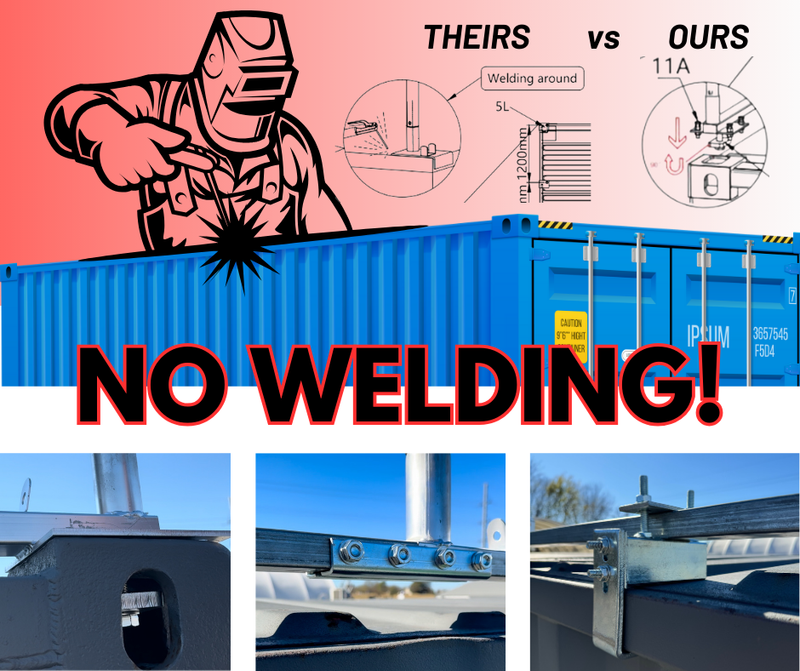

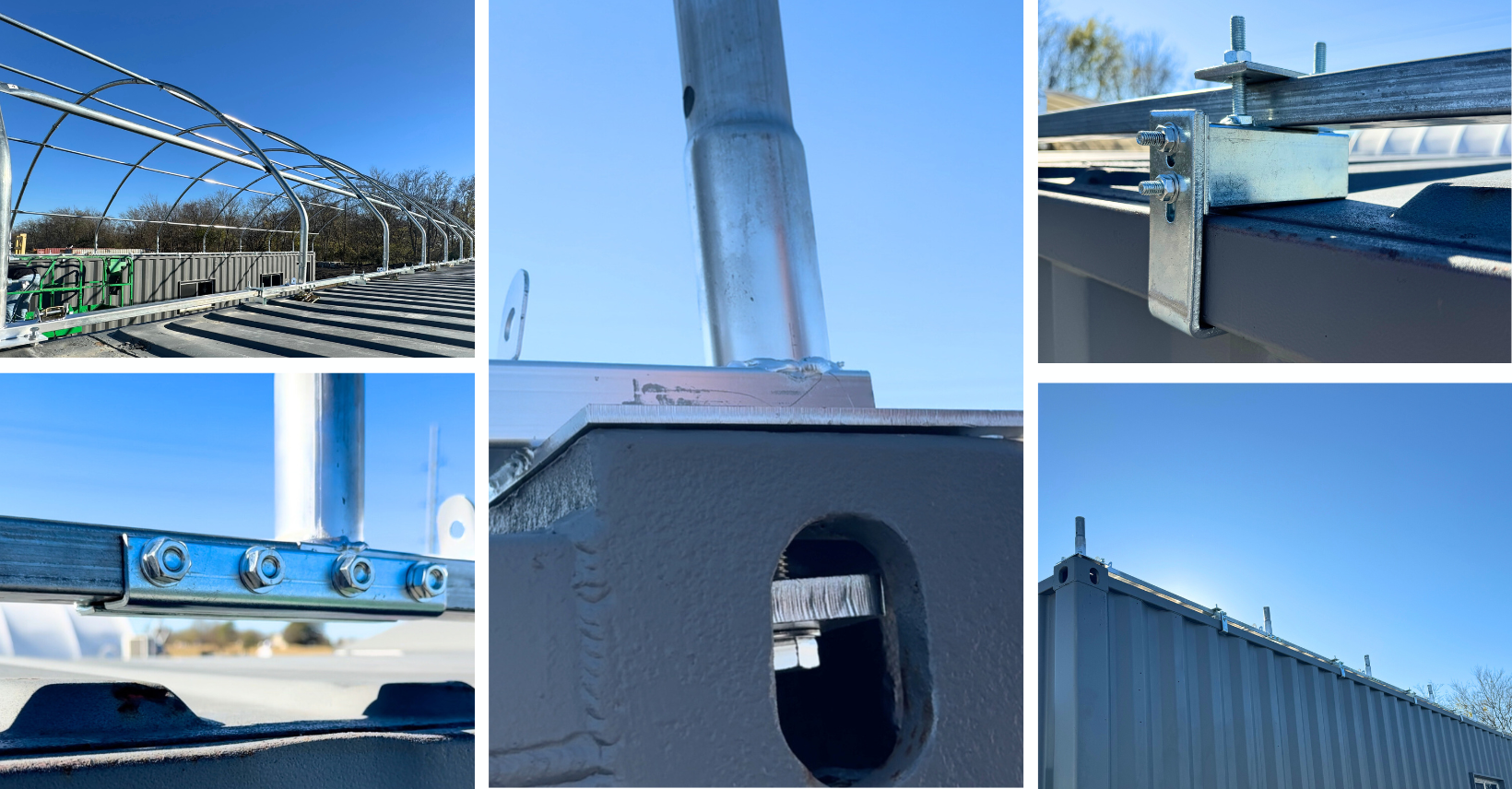
No. A Covermore Buildings container shelter does not get welded to your shipping containers. The shelter frame attaches to the containers with clamps and a twist-lock mechanism at the four corners. That changes who can do the install, how long it takes, what happens to your containers and whether the shelter can move later.
Who can install a no-weld container shelter?
Anyone with basic tools can install a Covermore container shelter. The job does not take a welding professional or specialized welding equipment.
Welding a shelter frame to a shipping container takes skilled labor and specialized equipment, and welding can present safety hazards during installation. Taking the welding out of the job means:
- A faster install: there are no welding setups and no cooling times to wait on.
- Lower labor costs: no skilled welder is needed.
Does Covermore install container shelters?
Yes. Covermore Buildings does installation for customers in its local area, so ask whether your site is close enough.
Does a container shelter alter my shipping container?
No. The clamp and twist-lock system is designed to attach the shelter to the container without any alterations. That matters because welding can put stress on a container's metal, and some other installation methods can leave permanent marks.
Can you move a container shelter to a different container?
Yes. To relocate a Covermore shelter, un-clamp the frame and twist the locks. The shelter can then go on a different container or to another location entirely, whether your operation changes or you just need the shelter in a new spot.
How does a no-weld container shelter hold up to wind and rain?
On its own property in Oklahoma, the Covermore team has seen its shelters stay in place in 30 to 40 mph winds, only making noise. Those same shelters also made it through four inches of rain in two days, with equipment and offices kept underneath. The shelters have been up on that property for at least five years and are still in good shape.
Questions on the right machine for the job?
Straight answers on stock, freight, and what actually fits — no pressure.