


How to Weatherproof and Insulate a Fabric Building
Sealing the bottom flap, adding steel walls and doors, and insulating with vinyl-backed insulation are how we have weatherproofed our own fabric buildings.
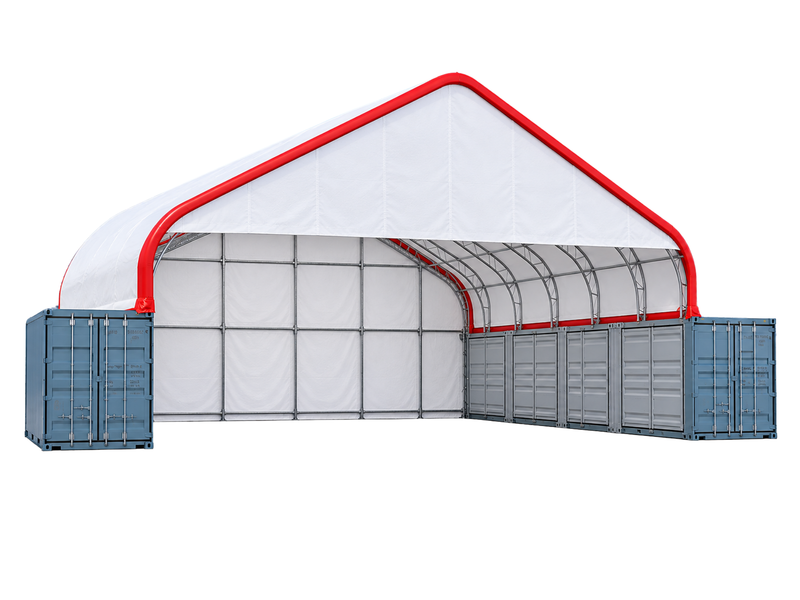
You can weatherproof a fabric building, and on our own buildings we have done it three ways: sealing the bottom flap against wind, closing the building in with steel walls and doors, and insulating it. Covermore Buildings sells tension fabric buildings, and here is how each of those has worked for us.
How do you seal the bottom of a fabric building against wind?
A fabric building is sealed against wind with the bottom flap along its base. On our 50x100x26 dual truss fabric building (50 feet wide, 100 feet long and 26 feet tall), you can seal that flap up or leave it loose so the building can breathe. We own several dual truss buildings, including a 50x150, and we seal some and leave others loose.
Sealed, the flap keeps wind from blowing through, but it will not keep rodents out.
Can you close in a dual truss fabric building with steel walls and doors?
Yes, a dual truss fabric building can be closed in with red iron steel walls attached directly to the frame. We did that on our own dual truss warehouse, and in those red iron steel walls we added a 12x14 overhead door, two walk-through doors and a 10x10 dock door.
How do you insulate a fabric building?
A single pipe fabric building can be insulated with 2- to 3-inch vinyl-backed insulation and seam tape. We insulated one of our single pipe buildings that way, and it turned out great.
A dual truss building is more challenging to insulate. We have never sprayed foam insulation on a dual truss fabric building, though a mesh stretched between the uprights could give the foam something to cling to.
If you are closing in a fabric building and want to talk through the options, tell us what you are working with.
Questions on the right machine for the job?
Straight answers on stock, freight, and what actually fits — no pressure.