


How to Plan a Building Maintenance Schedule: What Facilities Teams Should Cover and What to Ask a Contractor
A guest guide from LWR Group: what a facilities team should put in a building maintenance schedule, how to plan work at height, and what to ask a contractor.
Guest article by LWR Group, a property maintenance company in England. It covers premises in England and Wales; rules in the US differ.
A building maintenance schedule is a written plan that says what is checked, how often, who does it and where the record is kept. Without one, work tends to happen only after something fails, and jobs that the law requires can be missed altogether. This guide sets out what a facilities team should put in a schedule, how to handle work at height, and what to ask a contractor before they start. It covers premises in England and Wales and draws on guidance from HSE and GOV.UK. Rules in other countries differ.
Start with the duties that are not optional
Some tasks are set by law, so they go into the schedule first.
-
Fire safety. GOV.UK says that anyone with control of non-domestic premises, such as an employer, owner, landlord, occupier, facilities manager, building manager or managing agent, is the "responsible person". They must carry out a fire risk assessment, review it regularly, and put in place and maintain appropriate fire safety measures.
-
Asbestos. HSE says the duty to manage asbestos covers all non-domestic premises. The dutyholder must assess whether asbestos-containing materials are present, presume that materials contain asbestos unless there is strong evidence that they do not, keep a register of their location and condition, and write a management plan that is reviewed every 12 months or sooner if necessary.
-
Legionella. HSE says employers and anyone in control of premises must identify and assess sources of risk, manage and control those risks, and keep the correct records.
-
Lifting equipment. HSE says lifting equipment should be thoroughly examined, normally once or twice a year and in some cases more or less often. A competent person carries out the examination and writes a report that includes the date the next examination is due.
Add the checks that depend on condition
Most other maintenance is set by the age, use and condition of the building rather than by a fixed legal date. A useful schedule has four lists:
-
Statutory checks: the duties above, each with an owner and a next due date.
-
Routine inspections: gutters, downpipes and drainage, external walls and pointing, windows and doors, ceilings and walls for stains, floors, and grounds and car parks.
-
Planned work: decoration, flooring and replacements for items that are near the end of their life, so they can be budgeted before they fail.
-
Reactive repairs: how a fault is reported, who triages it, and how quickly each kind of fault should be attended to.
Set the interval for each routine inspection from your own risk assessment, and review it after any incident, alteration or change of use.
Working at height belongs in the schedule
HSE defines work at height as work in any place where, without precautions, a person could fall a distance liable to cause personal injury. HSE says the Work at Height Regulations 2005 place duties on employers and on those who control any work at height activity, such as facilities managers or building owners who contract others to do it. Work must be properly planned and carried out by competent people, with the right equipment.
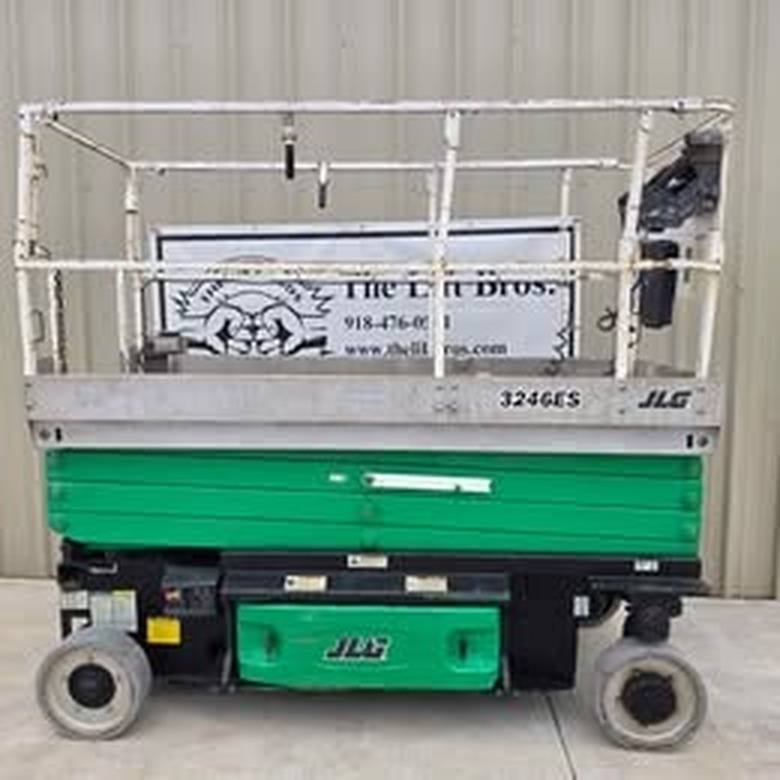
HSE gives an order to follow. First avoid work at height where it is reasonably practicable to do so. Where it cannot easily be avoided, prevent falls using an existing safe place of work or the right type of equipment. Where the risk cannot be eliminated, minimise the distance and consequences of a fall. Protection that works without the worker having to act, such as guardrails, scissor lifts and tower scaffolds, comes before measures like a harness that depend on the individual.
Ladders are not ruled out, but HSE says the law allows them only where a risk assessment shows that better fall protection is not justified because of the low risk and short duration of the task, or where existing features cannot be altered. As a guide, HSE recommends considering other equipment if a task means staying on a ladder for more than 30 minutes at a time. HSE also says the risks of working on or near fragile surfaces must be managed.
In practice, mark every task in the schedule that involves height, record how it will be done safely and say who will do it.
Who should do which job
Ground-level and internal work, such as repairs, decoration, flooring and grounds, can often go to one local firm. A site can use a local firm for building maintenance services at ground level and inside, and bring in specialists for anything at height. Roof and other high-level work normally goes to a specialist access contractor with the equipment, trained operators and in-date examination reports for it. A good general contractor will tell you plainly what it does not do and will help co-ordinate the specialists.
What to ask a contractor before they start
-
Who will do the work, and what is their experience of this kind of task? HSE says work at height must be done by people with the skills, knowledge and experience for the job.
-
Can I see the risk assessment and method statement for any work at height, and the equipment they will use? If a lift or platform will carry people, ask for its latest thorough examination report.
-
Have you seen our asbestos register? HSE says the dutyholder must give information on the location and condition of asbestos-containing materials to anyone who may work on or disturb them.
-
Who is taking the waste away? Ask for the carrier's registration number and check it on the Environment Agency's public register of waste carriers.
-
What will be in writing? Ask for the scope, price and timing before work starts, and a record afterwards of what was done and what was found.
-
What will you not do? A contractor that names the jobs it will pass to a specialist is easier to trust than one that says yes to everything.
Keep the record and review it
For every task, record what was done, when, by whom, what was found and when it is next due. Keep the paperwork for statutory checks together so it can be produced quickly. Review the whole schedule at least once a year. The 12-month review of the asbestos management plan is a convenient date to anchor it to, and it is a good time to compare what was planned against what actually broke.
Checked against HSE and GOV.UK guidance in November 2026. Guidance and regulations change, so check the current versions, and take advice on your own premises. This guide is general information and is not legal advice.
Sources
Need a scissor lift or mast lift for indoor high-level work? See our scissor lifts and vertical mast lifts.
Questions on the right machine for the job?
Straight answers on stock, freight, and what actually fits — no pressure.