Landscaping with a Mini Excavator: The Ultimate Tool for Small Projects
A mini excavator digs, grades, trenches and clears brush on small properties. Most buyers digging waterlines choose a 23 horsepower gas model.
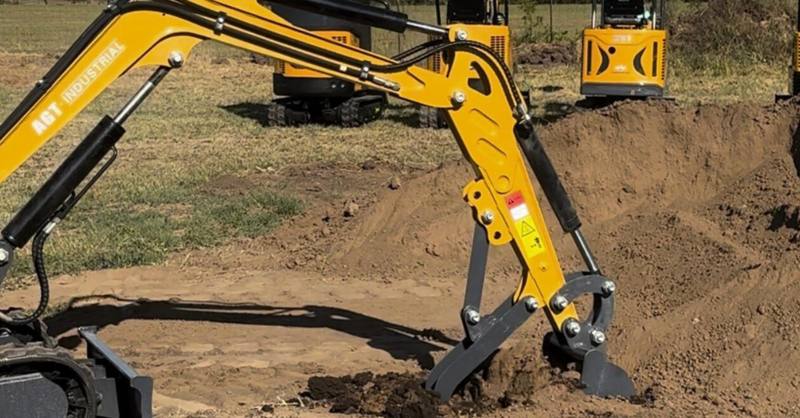
A mini excavator for landscaping gives small landowners, gardeners and DIY owners the power of an excavator with the convenience and maneuverability of a compact machine. Paired with the right attachments, a mini excavator takes on most of the work on a smaller residential landscaping project, from digging and grading to brush clearing and stump removal. Chupp Industrial sells mini excavators, and this guide covers the landscaping jobs a mini excavator does and the attachments that help.
Why use a mini excavator for landscaping?
Homeowners and small business owners turn to a mini excavator for landscaping because of its versatility and efficiency:
- Compact size: A mini excavator is small enough to work in tight spaces such as backyard gardens, small yards and narrow driveways that larger machines cannot reach.
- Versatility: With a variety of attachments, one mini excavator handles a wide range of tasks, from digging trenches to clearing brush.
- Power and precision: Despite its size, a mini excavator performs tasks that would usually require a larger machine, and with the right attachment the operator has close control even on delicate tasks.
- Less hand labor: A mini excavator does the heavy lifting, digging and clearing much faster than manual labor, which cuts the need for multiple workers and lets one person get the job done.
- Cost: For small-scale landscaping projects, a mini excavator is more affordable than larger machinery, which matters to DIY owners and small business owners on a budget.
What landscaping jobs can a mini excavator do?
A mini excavator digs, grades and trenches around a home or small property, and each job uses the excavator a little differently:
- Digging: For a new garden, a pond or the foundation of a new structure, the mini excavator's small size and arm give precise control over digging depth and width, so the hole comes out the size you want.
- Grading: Using the bucket or a grading attachment, the operator levels ground for a new garden bed, patio or lawn area so the area is ready for planting or construction.
- Trenching: A mini excavator digs the narrow, deep trenches that irrigation systems, drainage and utility lines need, which suits landscape work that has to be careful and precise.
Can a mini excavator handle brush clearing and stump removal?
Yes, a mini excavator handles brush clearing and stump removal once the right attachment is on the arm. When a property is overrun with unwanted vegetation, a mini brush cutter on the excavator clears brush, small trees and other growth with minimal effort, whether you are preparing land for new landscaping or clearing out invasive species.
A mini excavator equipped with a stump grinder or a hydraulic thumb can quickly remove stumps from a yard.
What size mini excavator do I need for trenches and waterlines?
Most buyers digging water lines around a house choose a 23 horsepower gas mini excavator.
For lighter work, a 13 horsepower gas mini excavator is great for digging holes and running trenches, but the 13 horsepower machine is not meant for heavy digging like a basement. A diesel mini excavator has more power than a gas unit and is more heavy duty.
Which attachments help most when landscaping with a mini excavator?
Beyond the brush cutter, four popular attachments expand what a mini excavator can do on a landscaping job: an auger, a larger bucket, a hydraulic thumb and a hammer or breaker.
- Auger: An auger drills holes for fence posts, trees or an irrigation system, and the size of the auger bit can be changed to suit the project.
- Larger bucket: A bigger bucket handles larger loads of soil, rocks or debris and moves more material in less time.
- Hydraulic thumb: A hydraulic thumb lets the excavator grab and move large rocks, logs and debris with precision, which makes clearing land and loading materials easier.
- Hammer or breaker: A hammer or breaker breaks up concrete and rock, such as old pavement, foundations or rock outcroppings, to prepare the ground for landscaping.
Chupp Industrial's team fits a hydraulic thumb by hooking the thumb into the auxiliary hydraulic line on the boom, a line that would otherwise just dead-end. Because the thumb uses that line, the hydraulic thumb has to be disconnected before any other auxiliary hydraulic attachment can run on the boom.
Will a brush cutter or auger fit my mini excavator?
Chupp Industrial checks the pin size and pin spacing of a specific mini excavator before confirming that an auger or brush cutter fits it. Pin spacing means the center-to-center distance between the pins and the width of the attachment point, and Chupp Industrial cannot confirm an attachment's fit on a specific excavator without those measurements.
Brush cutter size matters as well. A 54-inch brush cutter rated for 3 to 8 ton mini excavators would probably be pushing it on a smaller excavator of about 20 horsepower, since a cutter that size usually fits bigger machines. For a smaller excavator, step down to a smaller brush cutter and measure the pin size to confirm fit.
Questions on the right machine for the job?
Straight answers on stock, freight, and what actually fits — no pressure.