Genie Scissor Lift: Micro Lift or Standard 19-Foot Machine?
Choosing a Genie scissor lift starts with size: a compact micro lift, a standard 19-foot machine, or a 26- or 32-foot lift with a bigger deck.

If you are shopping for a Genie scissor lift, the first choice is not the brand. It is the size: in the 19-foot class, you choose between a compact micro lift and a standard-width slab scissor lift. They look alike from a distance, but they work very differently once you get them inside a building.
The Lift Bros sells used and refurbished scissor lifts from Chouteau, Oklahoma, and is an authorized Genie, JLG and Skyjack dealer. The same size questions come up whatever the brand, so some examples below use machines from other brands. Here is how we help buyers make this call.
How Do Micro and Standard 19-Foot Scissor Lifts Differ?
Pick a micro lift if it must fit through doorways, elevators or tight aisles; pick a standard 19-foot machine if you need more platform for people, tools and material. The differences come down to width, weight and platform size.
- Micro machines have a narrow chassis and a shorter, smaller platform. They fit through standard doorways, ride in an elevator in many buildings and turn in tight aisles. They also weigh less, which helps on floors with limits.
- Standard machines are wider and give you a larger platform. That means more room for two people, tools and materials, and usually a higher platform capacity and a steadier feel at height.
What they share: both are electric, both raise the platform to about 19 feet, and both are meant for smooth, firm floors. A 19-foot scissor lift has about a 25-foot working height, because 19 feet is the platform height and you can reach about six feet above it. The right choice depends on where the lift will spend its life.
When Should You Choose a Micro Scissor Lift?
Choose a micro lift if you work inside finished buildings. Think of retail spaces, offices, school hallways and stores with narrow aisles. If the lift has to get through a door to reach the work, a narrow chassis is the answer, not a nice extra.
Micro lifts are also the pick when floor loading is a worry, and when one person does the job alone with a few hand tools.
When Is a Standard 19-Foot Scissor Lift Better?
Choose a standard machine when the platform is your workbench. Drywall crews, electricians running conduit, sprinkler fitters and warehouse maintenance teams all move more than one person and a stack of material. A bigger deck, and the ability to extend it, saves trips up and down.
Standard machines also feel more planted at full height. If you are doing overhead work for a full shift, that matters.
What If a 19-Foot Scissor Lift Isn't Big Enough?
If a 19-foot platform is too low or too small for the crew or the material, the next step up is a 26-foot scissor lift, and above that a 32-foot machine with an even bigger deck. A pair of Snorkel machines, the 3219E (19 feet) and the 3226E (26 feet), shows the difference:
- Both lift about the same weight. They are rated around 550 pounds, though you should always check the exact number on the lift's own capacity plate before loading it.
- The 26-footer's platform is about 18 inches to two feet longer than the 19-footer's, and the bigger machine weighs roughly 1,200 pounds more.
- Both have a slide-out deck. The 26-footer's longer deck means less repositioning on the job and more room if a second person needs to be on the platform.
Is There a 32-Foot Scissor Lift With an Even Bigger Deck?
Yes. A JLG 32-foot scissor lift has the biggest platform we have seen on a slab scissor lift: a deck 46 inches wide, and the deck pulls out for even more working room.
That wide deck makes the 32-footer useful for steel building and pole barn work such as setting trusses. Use your own judgment on loads, and stay within the rated capacity shown on the lift's own capacity plate.
What If You Work on Rough Ground or Need to Reach Out?
For dirt, gravel or uneven job sites, use a rough terrain scissor lift, not a micro or standard slab scissor. Micro and standard 19-foot scissor lifts are slab machines, and a slab machine on soft ground is a tipping and traction problem. A lift is not the right one if it cannot go where the work is.
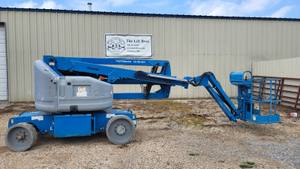
If you need to reach out and over something, a scissor lift is the wrong tool altogether. Scissors go up and down. A boom goes up and out. Decide which motion you need before you decide on a size.
Is a Used or Refurbished Genie Scissor Lift a Good Buy?
A used or refurbished Genie scissor lift can be a good buy if you know what was replaced, what was tested and what shape the batteries are in. The batteries are the part of an electric lift that tends to disappoint buyers. If the seller cannot tell you what was done to the machine, keep looking.
Can You Buy One Scissor Lift or a Whole Fleet?
Yes, The Lift Bros sells both single scissor lifts and bulk lots. A contractor who needs one lift for a job and a facility that needs a fleet of them have different needs, and we can talk both through. The Lift Bros does not rent: we sell, repair and refurbish, so our advice will not steer you toward a rental you do not need.
Which Genie Scissor Lift Size Do You Need?
Choose a micro scissor lift if it must fit through a door or elevator, a standard 19-foot scissor lift if the platform carries more than one person and materials, a 26- or 32-foot machine if you need more height or deck, and a rough terrain machine if the floor is rough ground. To sort out which one fits, answer these four questions:
- Does the lift have to fit through a door or an elevator?
- How many people and how much material go on the platform?
- What is the floor: smooth slab, or something rougher?
- How long will an operator be up there at one time?
Questions on the right machine for the job?
Straight answers on stock, freight, and what actually fits — no pressure.