Stand-Up Mini Skid Steer: Uses, Limits and Track Types
What a stand-up mini skid steer handles well, where two-pump trenching falls short, and how high-track and horizontal-track machines differ.
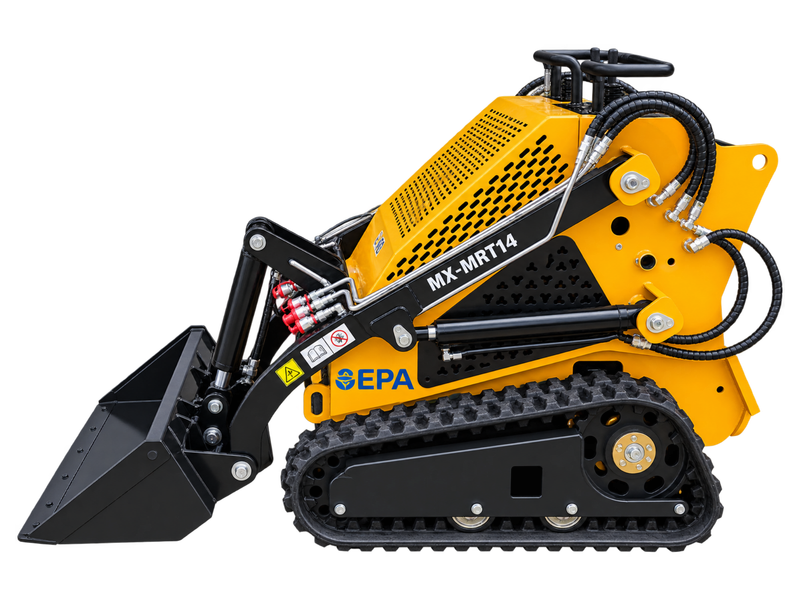
A stand-up mini skid steer is built for occasional, lighter work. At Chupp Industrial we sell most of them to homeowners and small property owners, such as people with a couple of acres who can't justify a full-size machine.
What is a stand-up mini skid steer used for?
A stand-up mini skid steer is used for small cleanup jobs and for work where a big skid steer would tear up the lawn. The machine is surprisingly capable, but it has its limitations, covered below. A good portion of ours also go to landscapers who are just starting out or who need an additional machine for that kind of cleanup work.
Can a mini skid steer scrape soft dirt after rain?
Yes, a stand-up mini skid steer has enough torque to scrape soft dirt, such as grading a strip of land after rain, though it loses traction quickly. When the bucket alone won't do it, a three-tooth ripper on the front helps:
- Rip the ground to loosen it.
- Switch to the bucket.
- Back-drag the ground smooth.
Can a stand-up mini skid steer run a trencher?
A stand-up mini skid steer can run a trencher only in a limited way, because the stand-up machines we sell have only two pumps. Real trenching takes a three-pump machine, where the third pump is dedicated to the auxiliary circuit so the trencher runs at full speed while you drive. On a two-pump machine you have to start the trencher, cut in, lift it, back up and repeat. That method works, but it is not ideal, and it wears on the pumps and the engine. Our post on two-pump mini skid steers covers why some attachments won't run on that setup.
What maintenance does a mini skid steer need?
A stand-up mini skid steer needs only basic small-engine maintenance, plus checking for leaks and keeping an eye on the hydraulic fluid. These machines leak no more than any other piece of equipment. A landscaper who runs a mini skid steer needs to stay on top of that maintenance.
Horizontal track or high track: which should you pick?
Pick a high-track mini skid steer if you need ground clearance; a horizontal-track machine sits lower. High-track machines are also said to ride a little better, though we could not tell much difference using both. The high-track design puts the drive motor up top, so the rollers down low take the shock from bumping over terrain and the motor is protected. On a horizontal-track machine the drive motor sits low, in line with everything else.
Thinking about a mini skid steer for your own property? Tell us what you plan to do with it and we will help you sort out whether it fits.
Questions on the right machine for the job?
Straight answers on stock, freight, and what actually fits — no pressure.