Choosing a Mini Excavator for Septic and Drain Field Jobs
How to match a mini excavator to septic work: drain field trench depth and width, side yard gate access, bucket width and the tank hole.
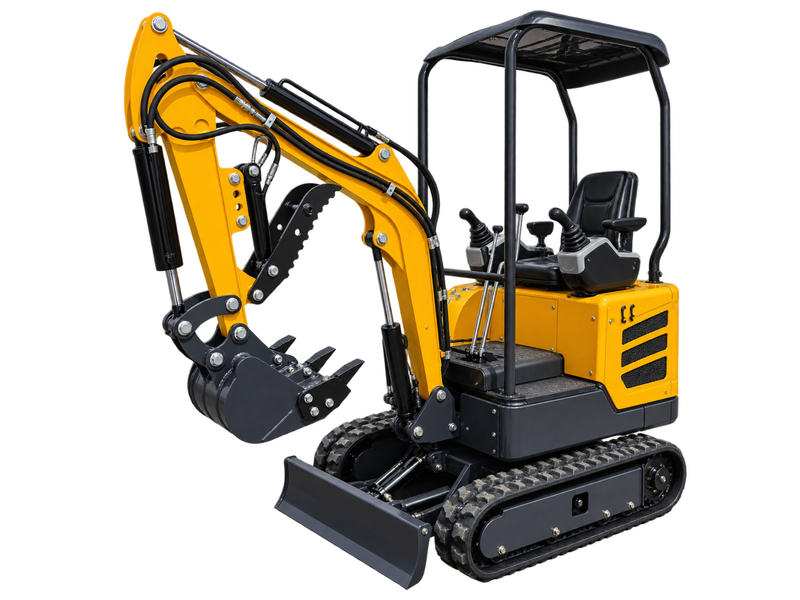
A septic install is mostly dig work: a tank hole, a line out to the field, and a set of drain field trenches. A 1-ton mini excavator handles most of that on a residential lot, and it fits places a bigger machine cannot. Here is how to match the machine to the job, from what we see contractors run into at Chupp Industrial in Chouteau, Oklahoma.
For the rest of the job (permits, layout, inspection and backfill), Projul's Septic System Installation Guide for Contractors walks through it step by step.
How deep and wide are drain field trenches?
Texas A&M AgriLife Extension describes a conventional soil absorption field as a bed or a set of trenches 18 to 36 inches deep and 12 to 36 inches wide (source). Your county or state permit sets the exact depth, width and spacing for your site, so read the design before you pick a bucket.
That depth is well inside what a small machine can reach. The AGT MH12RX digs to about 5 ft 4 in, and the CFG Industrial MX20R digs to about 7 ft 5 in.
Will it fit through the side yard?
On a finished lot the field is often behind the house, and the only way back is a gate or a gap between the house and the fence. Measure it before the machine shows up.
| Machine | Overall width | Operating weight | Max dig depth |
|---|---|---|---|
| AGT MH12RX | About 39 in | 1,798 lbs | About 5 ft 4 in |
| CFG Industrial MX20R | 42.5 in | 2,400 lbs | About 7 ft 5 in |
A 39 in machine goes through a 4 ft (48 in) gate with room to spare. The MX20R is wider and heavier, but it brings a 23 HP V-twin, a side-swing boom and more depth.
Which bucket width for the trench?
Match the bucket to the trench width on the permit. The MX20R ships with a 17 in digging bucket, which cuts a narrow trench in one pass. For a 24 or 36 in trench you either make two passes or run a wider bucket. A bucket that is too wide for the spec means extra digging, extra gravel and extra backfill.
What about the tank hole?
The tank pit is the deepest dig on the job. Take the tank's height plus the cover your permit calls for, and compare it with the machine's max dig depth. If the hole is deeper than the machine reaches, that is when the bigger machine (or a bigger rental for one day) earns its keep.
Protect the field once it is in
The EPA says never to park or drive on a drain field. Plan your path so the machine is never on finished trenches, and back out the way you came in. Rubber tracks on these machines are about 7 in wide, which is easier on a lawn than steel tracks, but they still compact soil.
Before you dig
Call 811 a few days ahead so buried utility lines are marked. On a rural lot, also ask the owner where the well and any old lines are.
Running the job
Contractors running several septic installs at once can keep the schedule, estimates and job photos in one place with construction software like Projul.
If you want help picking a machine for septic and drain field work, browse our mini excavators or ask us. We've sold them for years and can tell you what fits your lot.
Questions on the right machine for the job?
Straight answers on stock, freight, and what actually fits — no pressure.